
LINK is America's first commercial space robot.
Designed, built, tested, and launched in less than a year, LINK attempted a first-of-its-kind mission to capture and boost NASA's Neil Gehrels Swift Observatory before it reenters Earth's atmosphere.
STATUS
END OF MISSION
MISSION ELAPSED
85 DAYS
LAST UPDATE
Sep 25, 2026

Swift Boost Mission
LINK UPDATEs
LAUNCHED
July 3, 2026
LAUNCH SITE
Kwajalein Atoll, RMI
LAUNCH VEHICLE
Pegasus XL
CUSTOMER
NASA
Mission Updates
September 25, 2026
09:00AM ET
Today, Katalyst concludes the LINK mission.
LINK began as an experimental prototype for an internal mission. But when NASA needed a rapid solution to help extend the life of the Neil Gehrels Swift Observatory, we adapted LINK to meet an unprecedented challenge: rendezvous with, capture, and boost a spacecraft that was never designed to be serviced.
While we were ultimately unable to include the capture and boost as part of the mission, LINK’s operations during its 85 days on orbit were significant.
In less than nine months, LINK moved from concept to launch and began on-orbit operations, generating valuable flight data and giving our team the opportunity to put a commercial robotic servicing capability to the test in the most demanding environment.
After LINK experienced an anomaly that affected its attitude control, Katalyst and NASA jointly decided to descope capture and boost from the mission. The rest of LINK’s mission would be focused on exercising the spacecraft’s systems to gather as much data as possible. This included rendezvous and proximity operations, where LINK was able to get as close as 12-15km away from Swift.
Though we did not accomplish all we set out to do, this mission put the challenge and value of robotic servicing on the world stage.
The experience has showcased why developing a robust robotic servicing capability matters. The lessons from LINK will inform the next generation of robotic spacecraft, including our standard-production vehicle platform, NEXUS.
“The future of space will require spacecraft that can do more once they get there. We’re building toward that future,” said Ghonhee Lee, CEO of Katalyst Space. “Advancing dynamic space operations will take companies that are willing to attempt difficult things, learn from them, and keep moving forward. Katalyst is ready. We believe LINK helped move that effort forward and we intend to keep building.”
We are grateful to NASA, our mission partners, and the broader space community for their support throughout the mission, from development and launch through on-orbit operations.
LINK is saying goodbye, but the work to advance dynamic space operations continues.
September 4, 2026
2:13PM ET
The Katalyst team is making the most of every minute of LINK’s on-orbit time.
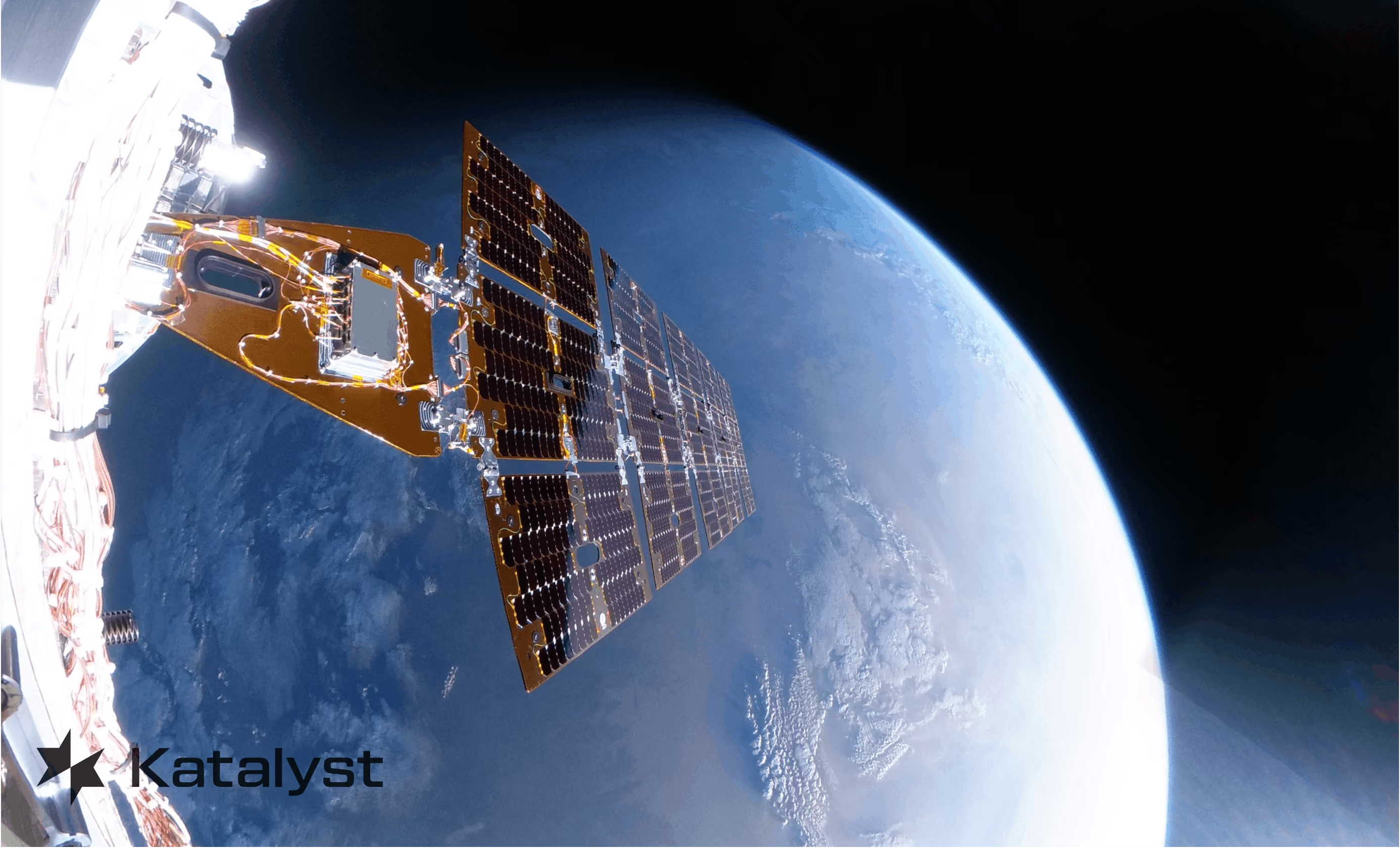
Over the past several days, we have been exercising LINK’s systems to test maneuvers, raise its orbit, and refine its phasing relative to NASA’s Neil Gehrels Swift Observatory. These tests help us collect meaningful rendezvous and proximity operations data and better understand how LINK's systems operate on orbit.
So far, LINK has:
- Deployed all three robotic arms
- Fired all three EP thrusters simultaneously
- Closed the distance to Swift to approximately 12-15 kilometers
We estimate LINK will remain on orbit for another 2-3 weeks before deorbiting and the mission comes to an end. With the remaining time, Katalyst will continue testing, learning, and building out the playbook for the future of robotic servicing. The experience gained from this mission does not just tell the story of LINK, but also directly shapes what comes next.

Friday, August 28, 2026
2:43PM ET
Katalyst is still flying the spacecraft. LINK’s mission is still active.
The spacecraft is raising its orbit and will continue to do so for the next week before beginning phasing relative to NASA’s Neil Gehrels Swift Observatory.
While we will no longer be pursuing capture and boost, the work is not over. We are collecting data on orbit that will be instrumental to future missions.
LINK’s mission has put robotic servicing on the world stage. Our team has taken an experimental concept and designed, built, tested, and launched a robotic spacecraft in just nine months—a timeline that would traditionally take years.
Pushing the boundaries of what is possible in space means taking on the missions that are difficult. LINK is generating the operational knowledge to do it faster, smarter, and at scale.
Wednesday, August 19, 2026
2:00PM ET
Following continued monitoring and assessment of the LINK spacecraft, Katalyst Space and NASA together have concluded that due to ongoing attitude control issues, the mission will not include the capture and boost of NASA’s Neil Gehrels Swift Observatory.
This does not mean LINK’s mission is over. The Katalyst team will continue making the most of LINK’s capability and time on orbit. Our focus is on conducting rendezvous and proximity operations where possible and exercising the spacecraft to gather as much data as we can.
While the mission will not have the ending we originally intended, NASA and Katalyst are assessing what milestones remain ahead. We will continue working to extract technical and operational value from the spacecraft.
Ghonhee Lee, CEO of Katalyst Space said, “Katalyst designed, developed, and launched an experimental spacecraft to go after an ambitious mission on an aggressive timeline. We took on this high-risk, high-reward challenge and are proud of the milestones we reached along the way. We have already learned a tremendous amount, and now our job is to turn those lessons into something durable—building a repeatable playbook to inform future rendezvous and proximity operations and satellite servicing."
The Swift boost mission is an unprecedented demonstration of commercial and government partnership: tackling critical space challenges on an expedited timeline. We are proud of the work the team has accomplished so far and will continue putting LINK to work in the time ahead.
Tuesday, August 11, 2026
4:55PM ET
The Katalyst team successfully uploaded a flight software update with new attitude controllers, which incorporates the remaining actuators in an updated control scheme.
We expect the updated configuration to support rendezvous operations and in the next phase of the mission, attempt to capture and boost NASA’s Neil Gehrels Swift Observatory.
Katalyst is now focused on performing a series of burns and maneuvers to adjust LINK’s orbit relative to Swift over the coming days.
Adapting to changing conditions is necessary due to the accelerated timeline for this mission. We are moving carefully and deliberately, assessing LINK’s performance at each phase. The team's work over the last several days has positioned LINK to continue its approach to Swift for the next phase of the mission.
Wednesday, August 5, 2026
6:30PM ET
The Katalyst team is continuing recovery operations and making steady progress toward returning LINK to its mission to rendezvous with and boost NASA’s Neil Gehrels Swift Observatory.
LINK was spinning at approximately 9 degrees per second when recovery operations began. The team has since reduced the spacecraft’s body rate to 1.47 degrees per second, where it will remain while the team prepares for the next phase of the mission.
The team used one of LINK's electric propulsion thrusters to slow the spacecraft down, consuming less than 100 grams of propellant to conserve fuel for the rendezvous and boost phase of the mission.
Over the next few days, we will upload a significant flight software update that includes new attitude controllers for LINK’s current configuration. This will restore full attitude control and allow the team to begin the phasing maneuvers needed to align LINK’s orbit with Swift.
Thursday, July 30, 2026
6:30PM ET
Over the last 48 hours, the Katalyst team has worked to reduce LINK’s rotation while assessing current spacecraft functionality and its control system.
A series of burns using a Hall effect thruster on a two-axis gimbal has reduced LINK’s spin rate from approximately 9 degrees per second to approximately 4 degrees per second. We believe the remaining rates will be reduced over the next series of burns.
In parallel, Katalyst is working closely with the NASA team to develop a new attitude controller for LINK’s current configuration. This work includes remapping the available actuators, retuning the control algorithms, and validating the updated controller in simulation before it’s activated on orbit.
The recovery effort has delayed rendezvous, with LINK now expected to approach Swift around the end of August. We’re focused on stabilizing the spacecraft and restoring core system functionality while planning rendezvous with Swift, which we will begin executing once recovery is complete.
Tuesday, July 28, 2026
12:56PM ET
During commissioning, the Katalyst team encountered a series of technical issues related to attitude control of the spacecraft. Over the last 72 hours, the LINK spacecraft has been in a multi-axis spin, causing a temporary loss of communications and subsequent bus reset.
Currently, two of three reaction wheels onboard LINK are disabled due to issues related to the upstream bus electrical power system, and the spacecraft has partial RCS functionality. LINK’s other major subsystems, electric propulsion, robotics, RPO sensing, and power are functioning properly, as well as S-band and L-band communications.
Over the coming days, Katalyst will work to reduce the body rates using the gimbaled electric propulsion thrusters and stabilize the spacecraft. We have already begun this series of burns and are seeing the intended effect.
We anticipate the following steps over the next few weeks:
- Update the guidance, navigation, and control schemes to reflect the current spacecraft configuration
- Verify and validate the updated control schemes and FSW with end-to-end simulation and ground testing to thoroughly understand the interactions between subsystems with the updated configuration
- Maneuver to co-elliptical with Swift using the updated control schemes
- Perform inspection of Swift and other RPO activities
- Attempt a capture of Swift, pending spacecraft state of health and safety
While these technical issues require a revised approach, our team is working around the clock alongside our NASA partners. The mission remains active and we continue to believe that with these changes, LINK has a viable path to rendezvous with Swift.
July 24, 2026
5:06PM ET
Since launch, Mission Operations has been working hard to commission LINK, bringing new systems online, validating spacecraft performance, and tuning the spacecraft ahead of rendezvous with NASA’s Neil Gehrels Swift Observatory.
As part of that process, LINK has been gradually increasing the duration of its thruster burns to prepare for the longer, multi-hour burns it will execute in the rendezvous phase.
.avif)
July 13, 2026
7:17PM ET
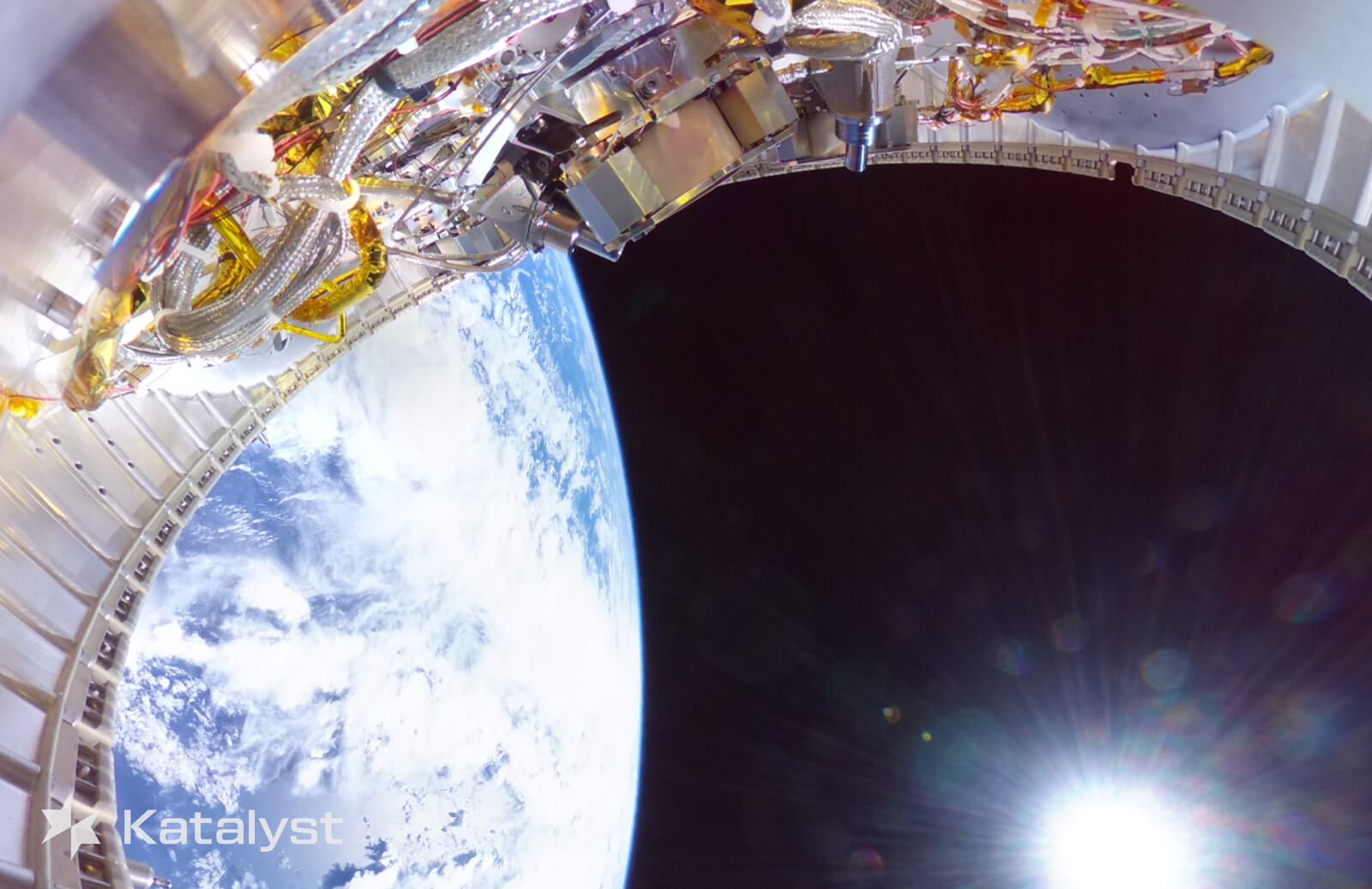
The team is working around the clock to complete spacecraft commissioning, with key systems, including communications, propulsion, and power, coming online. We're about halfway through commissinoing. Once commissioning is complete, LINK will be underway to rendezvous with NASA's Neil Gehrels Swift Observatory.
July 9, 2026
9:43AM ET
Since launch, the team has:
- Deployed LINK’s solar arrays, so the spacecraft can generate and store its own power
- Established routine communications, receiving telemetry from LINK and sending commands back to the spacecraft
- Begun checkout of LINK's propulsion system. This includes the Hall effect thrusters that will take the spacecraft to Swift and perform the orbital boost, and the reaction control system (RCS) thrusters which will provide the precise maneuvering needed to safely capture Swift
Over the next few weeks, the team will continue verifying spacecraft performance, completing system checkouts, and preparing LINK for rendezvous with Swift. This time was built into the mission plan to evaluate the spacecraft's performance in orbit and make any adjustments needed before the next phase of the mission.
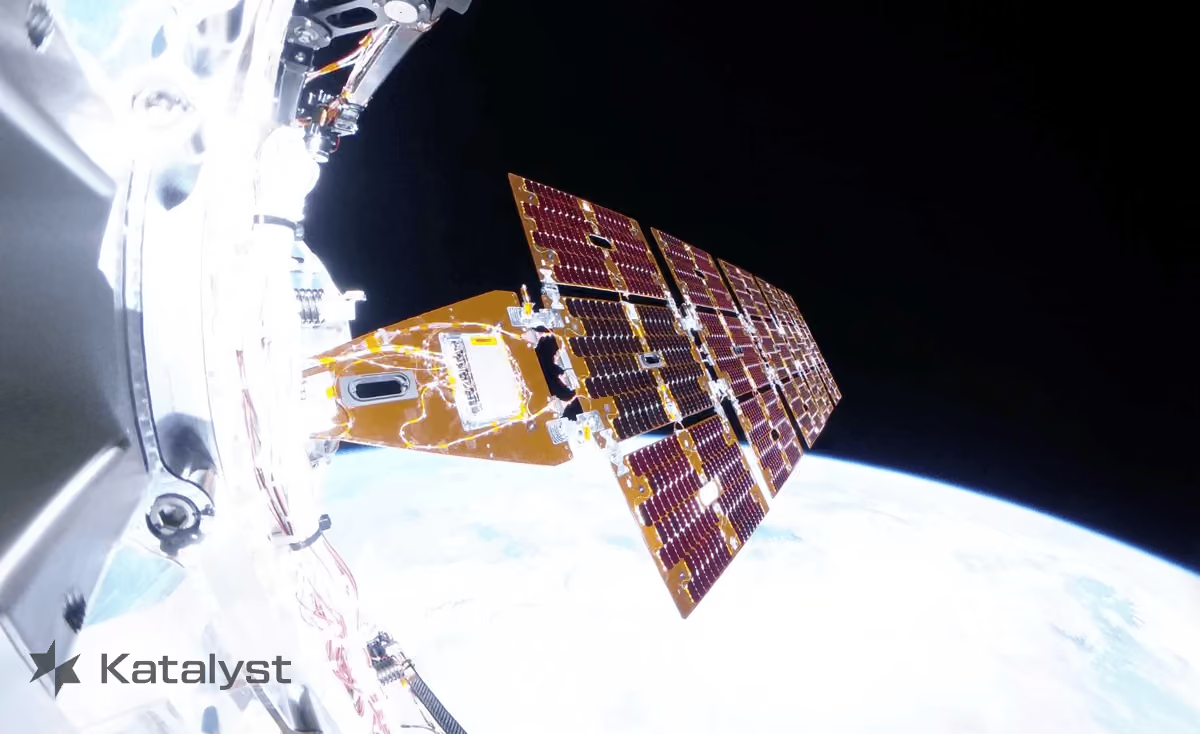
LINK is settling into life on orbit as the Katalyst team continues spacecraft commissioning ahead of its mission to boost NASA's Neil Gehrels Swift Observatory.
July 3, 2026
10:57AM ET
Mission Operations has successfully communicated with LINK. This confirms the spacecraft is operating on orbit, generating power, and transmitting telemetry, allowing the Katalyst team to begin on-orbit commissioning and system checkouts.
Nine months after receiving the contract to design and build a robotic spacecraft to boost NASA's Neil Gehrels Swift Observatory, LINK is communicating from orbit.
.jpg)
July 3, 2026
5:16AM ET
LINK launched aboard Northrop Grumman's Pegasus XL rocket on July 3 at 8:36PM in Kwajalein Atoll (4:36AM ET) and has reached orbit. Katalyst Mission Operations is now working through the next planned mission milestones, beginning with acquisition of signal and initial spacecraft checkout.
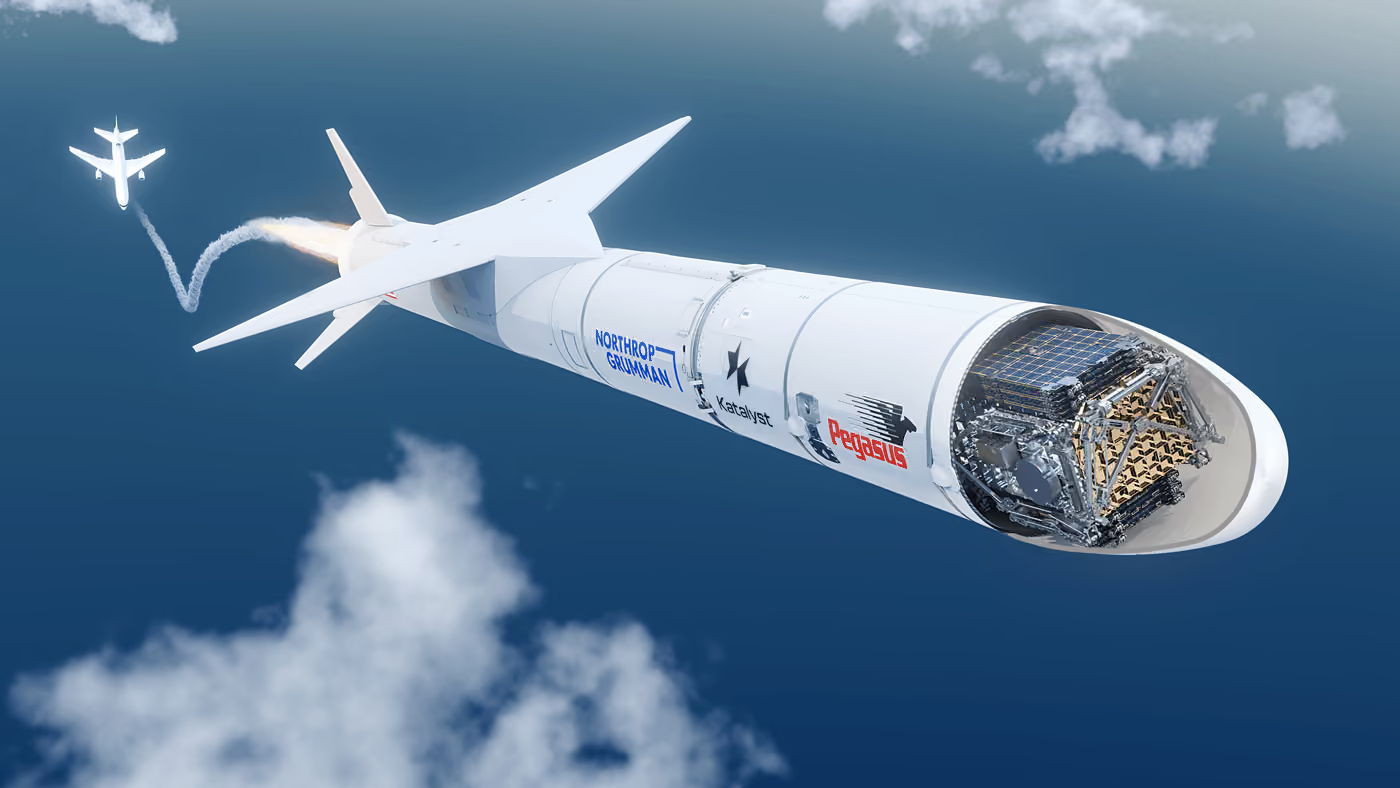
Credit: Northrop Grumman
July 2, 2026
9:30PM ET
The next launch attempt for the Swift Boost mission has been confirmed for no earlier than July 3, 4:35AM ET.
July 2, 2026
7:09AM ET
The launch of Katalyst’s robotic servicing spacecraft LINK has been postponed.
Following an update from Northrop Grumman, a launch vehicle issue after takeoff of the L-1011 Stargazer aircraft temporarily prevented deployment of the Pegasus XL rocket.
Katalyst has confirmed that LINK is secure and ready for flight.
The date of the next launch attempt for this mission will be determined after teams have reviewed data from today’s attempt.

July 1, 2026
5:05AM ET
Launch has been postponed due to unfavorable weather conditions. The next launch attempt is targeted for no earlier than July 2, 5:09AM ET.
LINK remains securely encapsulated in the Pegasus XL rocket and ready for flight.
30 Jun 2026
5:16AM ET
The Swift mission launch has been postponed due to unfavorable weather conditions, and is now targeting no earlier than July 1, at 5:43AM ET.
LINK remains ready for flight, and our team is continuing to work closely with NASA and Northrop Grumman as we prepare for the next launch opportunity.
July 24, 2026
5:06PM ET
Since launch, Mission Operations has been working hard to commission LINK, bringing new systems online, validating spacecraft performance, and tuning the spacecraft ahead of rendezvous with NASA’s Neil Gehrels Swift Observatory.
As part of that process, LINK has been gradually increasing the duration of its thruster burns to prepare for the longer, multi-hour burns it will execute in the rendezvous phase.