Katalyst Concludes LINK Mission, Advances Future Robotic Space Operations
BROOMFIELD, Colo. — September 25, 2026 — Katalyst Space announced the completion of its LINK mission, concluding an unprecedented effort to rapidly develop and operate a commercial robotic spacecraft designed to rendezvous with, capture, and raise the orbit of NASA’s Neil Gehrels Swift Observatory. The spacecraft deorbited and reentered Earth’s atmosphere on September 25, 2026. While LINK’s mission did not ultimately include the capture and boost of Swift, the mission demonstrated a new model for rapidly fielding and operating complex robotic spacecraft on orbit. The Katalyst team operated the spacecraft on orbit for 85 days, generating valuable flight data and operational experience that will inform the next generation of spacecraft.
Katalyst was awarded the contract for the mission in September 2025 and launched LINK on July 3, 2026. From contract award to flight, Katalyst designed, built, tested, and launched LINK in nine months as part of a $30 million mission. The mission was ambitious: Swift was never designed to be serviced, and LINK was required to approach and attempt to manipulate Swift, a satellite substantially larger than LINK, without a standardized docking interface.
“From the beginning, this was a high-risk, high-reward mission,” said Shawn Domagal-Goldman, Astrophysics Division director at NASA Headquarters in Washington. “Without intervention, Swift was going to re-enter the atmosphere by year’s end. And while we’ll be sad to see Swift’s mission come to a close, we knew this boost effort would be worthwhile either way – advancing U.S. spacecraft servicing technology, challenging us to meet unprecedented mission timelines, and testing how we operate satellites to extend their time in low Earth orbit.”
“NASA should be willing to move quickly and take smart risks when the potential return is worth it, and that is exactly what we did with this mission. This is not the outcome we were working toward, but it does not change why this mission was worth attempting,” said NASA Administrator Jared Isaacman. “The team moved with extraordinary speed to give Swift a chance to carry out more science while advancing capabilities America will need for satellite servicing in the future.”
“LINK was built to take on a problem that did not have an easy solution,” said Ghonhee Lee, CEO of Katalyst Space. “We knew from the beginning that this was an ambitious mission on an aggressive timeline. We also knew there was a meaningful possibility that we would encounter challenges that could not be solved in time to achieve every ambition. While we did not accomplish every objective we set out to achieve, in less than a year we went from mission concept to launching and operating the first commercial space robot. This is a foundation we can build on.”
LINK Mission Recap
The LINK mission brought both the opportunities and technical difficulty of robotic satellite servicing onto the world stage.
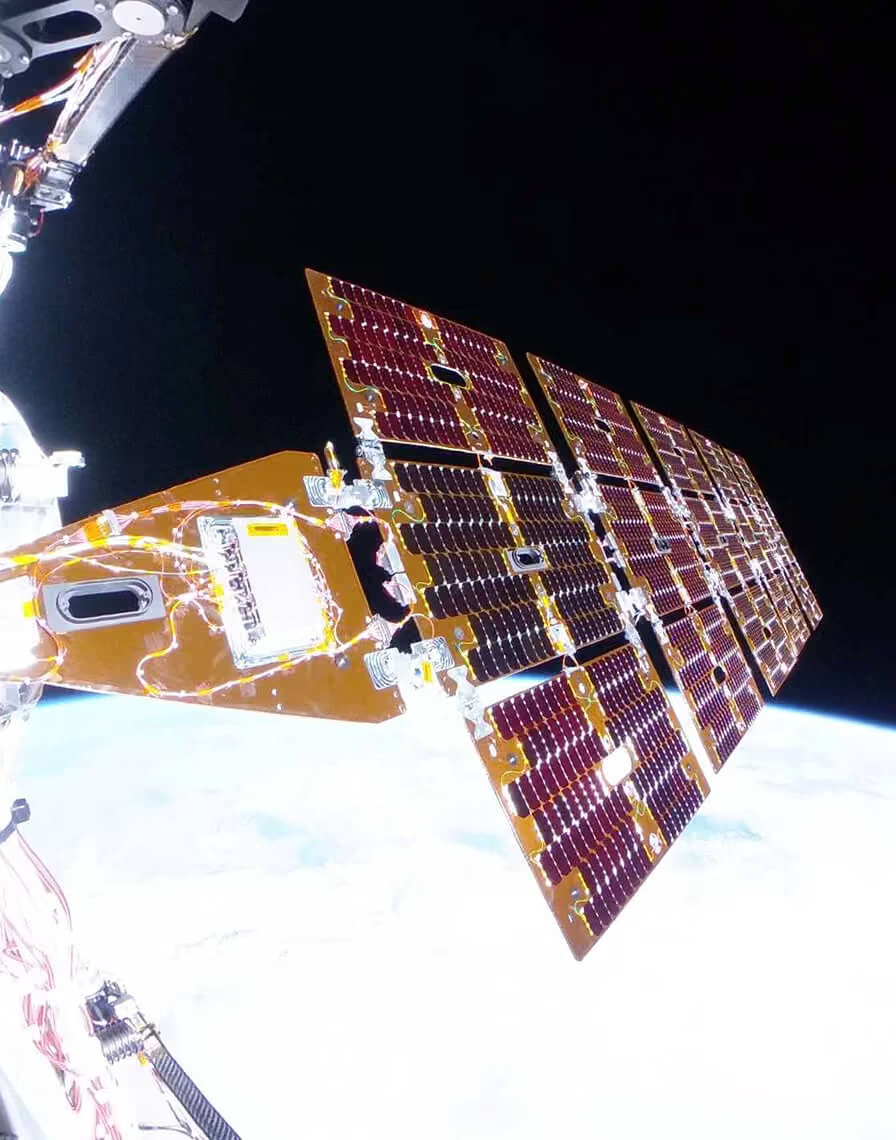
Following launch abroad Northrop Grumman’s Pegasus XL rocket on July 3, 2026, LINK successfully completed launch and early orbit operations (LEOP), deployed its solar arrays, established routine communications, and began commissioning of major spacecraft systems including avionics, power, propulsion, rendezvous and proximity operations (RPO) sensors, and robotics.
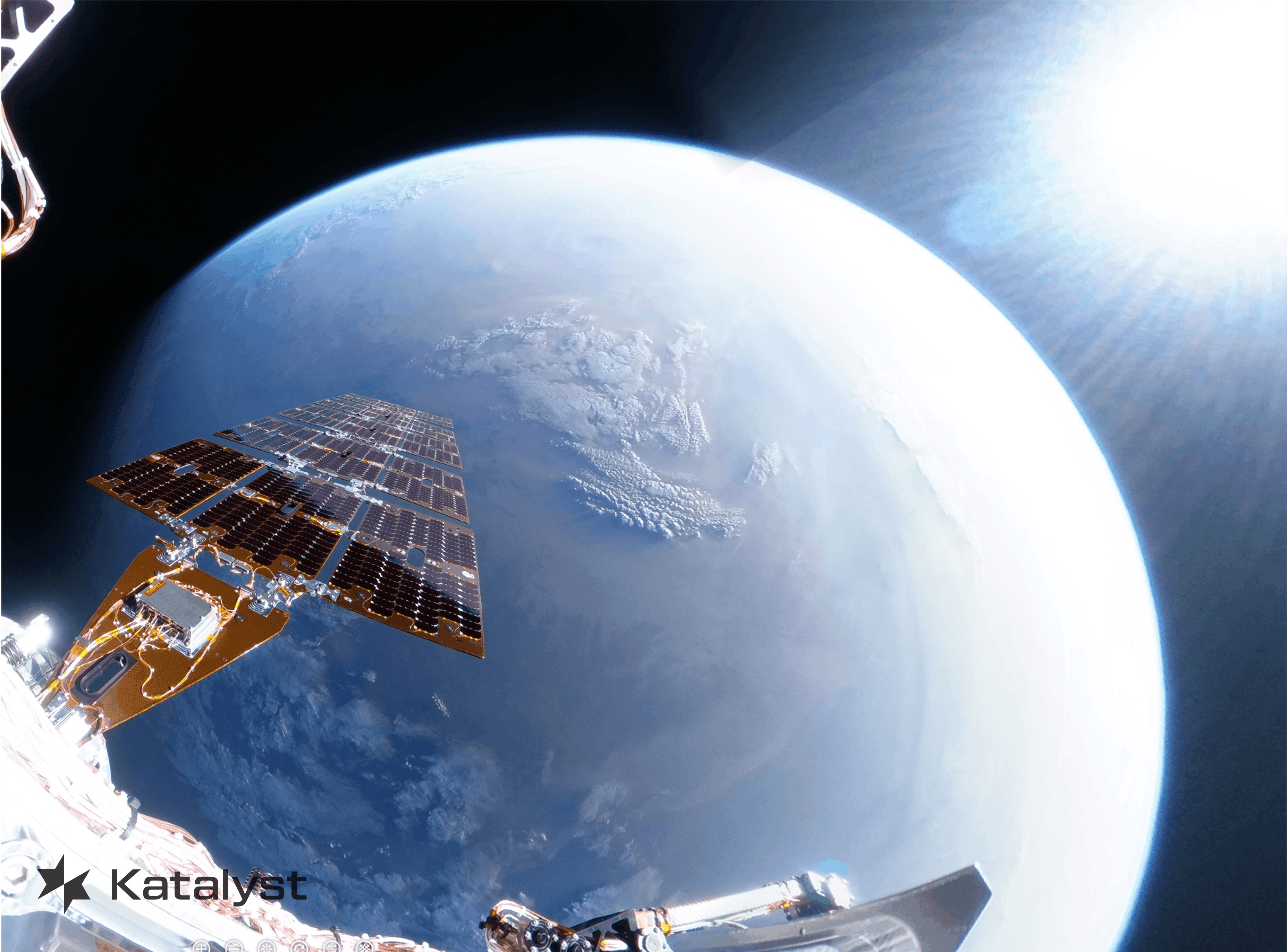
During commissioning, LINK experienced an anomaly that affected attitude control and caused the spacecraft to enter a multi-axis spin, temporarily disrupting communications. Two of the spacecraft’s three reaction wheels became unavailable during this time due to an electrical power system fault.
Katalyst engineers worked to restore communications and stabilize LINK, developing and implementing a series of new guidance, navigation, and control (GNC) modes that relied on a combination of the Reaction Control System (RCS) thrusters and the remaining operable reaction wheel. Over the next few days, the team used the hall effect thrusters to reduce LINK’s body rate from 9 degrees per second to1.47 degrees per second. This allowed operators to upload new flight software, including the updated GNC controllers, and bring the spacecraft to a spin-stable state. The updated configuration allowed LINK to reestablish limited attitude control using the spacecraft’s remaining actuators.
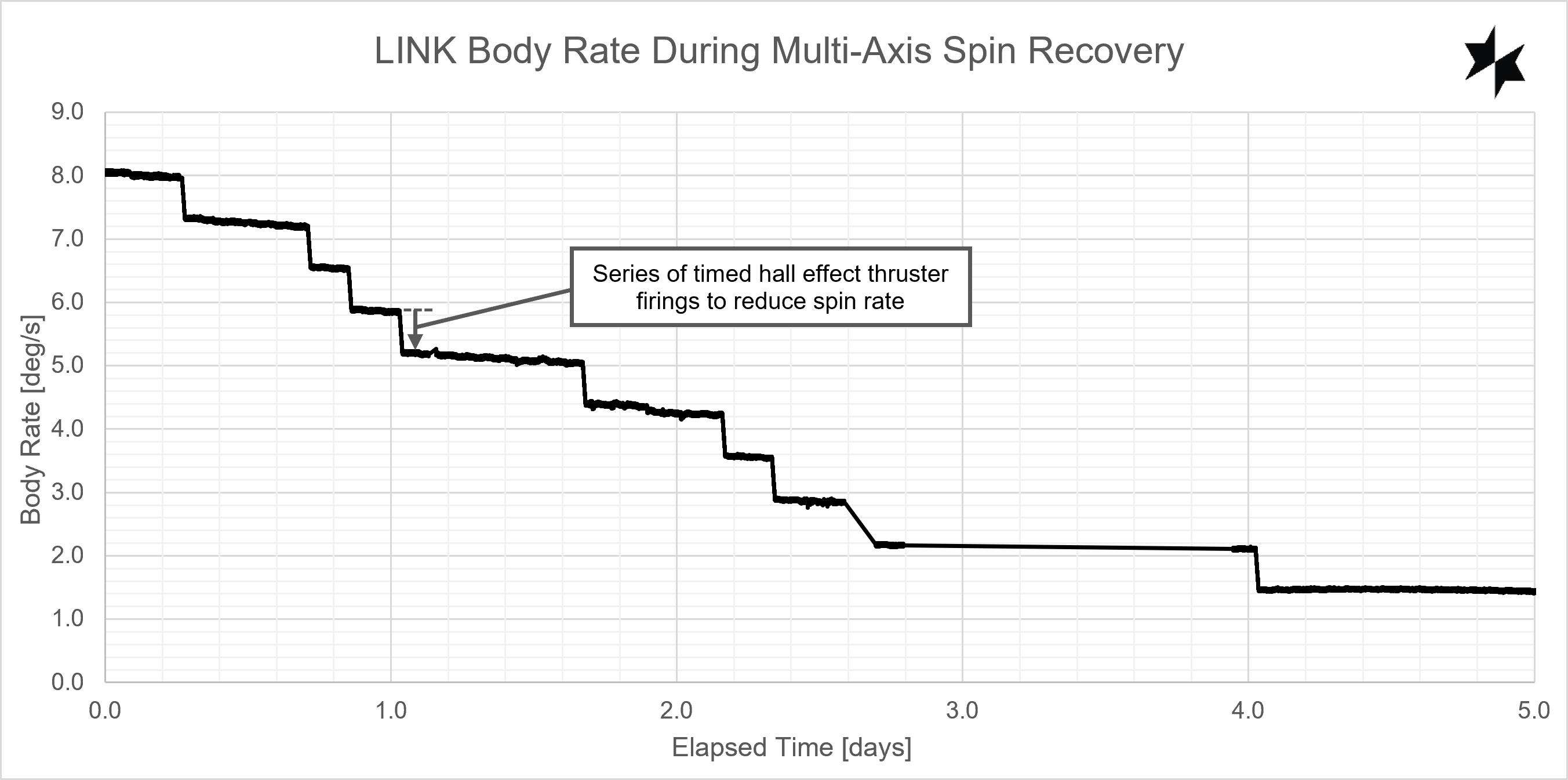
The team focused on operational strategies to manage the spacecraft with reduced attitude control capability and started to plan out LINK’s trajectory to adjust the orbit and phasing relative to Swift. The recovery efforts demonstrated the team’s ability to rapidly adapt LINK’s control architecture on orbit. However, relying on RCS for attitude control rapidly increased the rate of propellant consumption.
As a result, Katalyst and NASA together determined that LINK no longer had sufficient fuel to safely execute the planned capture and orbit-raising phase of the mission. Instead, LINK would continue operations focused on exercising its systems and gathering additional rendezvous and proximity operations data.
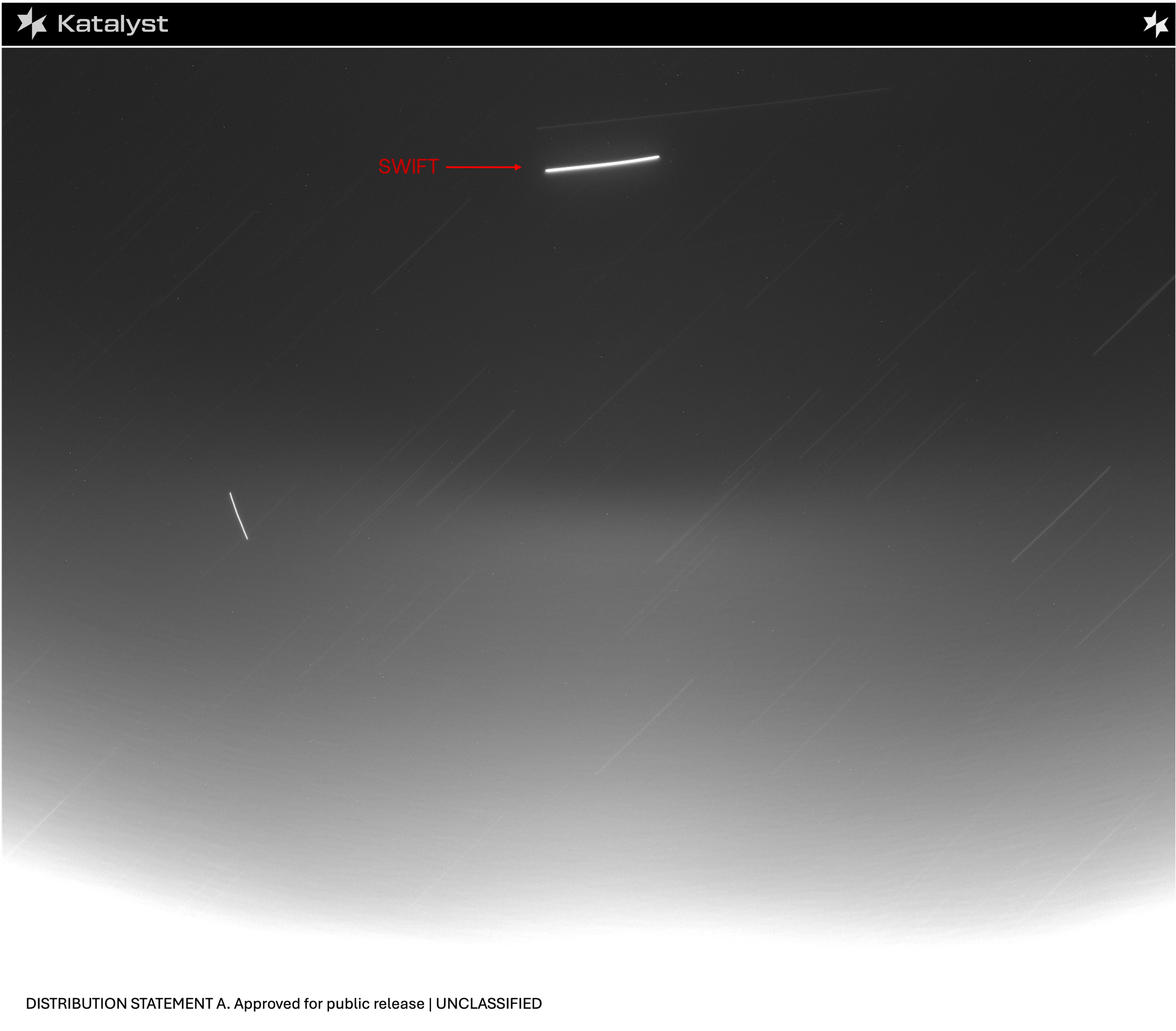
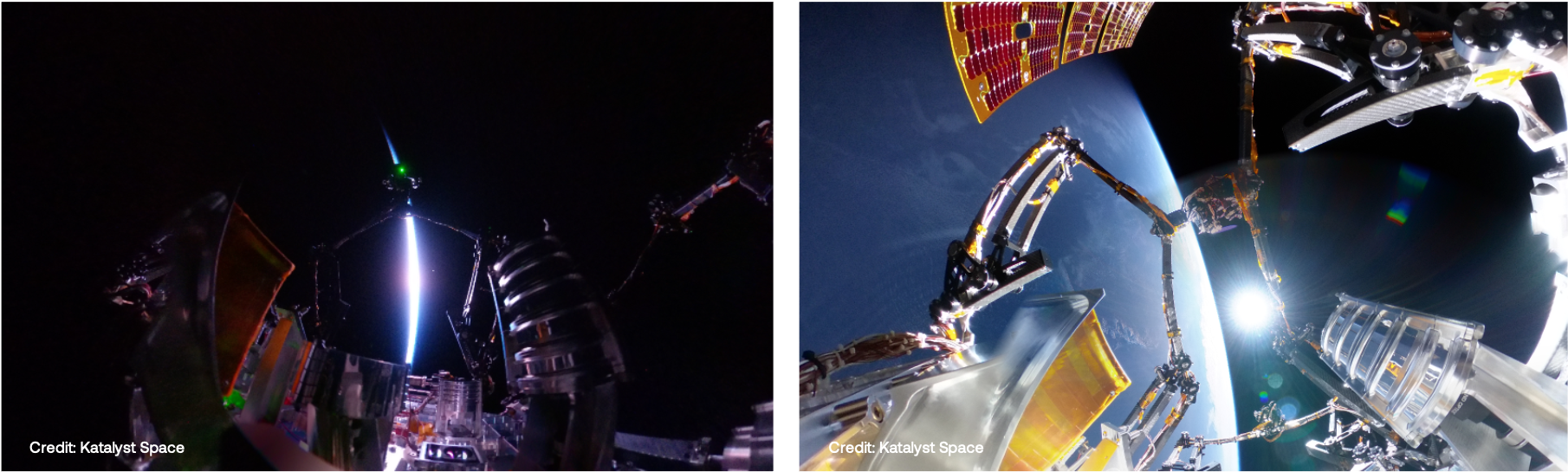
In the days that followed, LINK approached to within 12-15 kilometers of Swift and was able to collect unresolved imagery. The Katalyst team quickly designed and executed several engineering tests to assist in root cause analysis for anomalies, collecting invaluable data while on orbit across all systems. The team was also able to complete several tests with the robotic system, including kinematic control of the three robotic arms, lifetime testing, and practicing grapples with the grippers to validate operational procedures.
Building on Lessons Learned
LINK demonstrated an accelerated development model that moved from design through development, testing, and launch in less than nine months. On orbit, the mission generated data across all major subsystems and provided operational experience in commissioning, rendezvous and proximity operations, anomaly response, and recovery from off-nominal conditions.
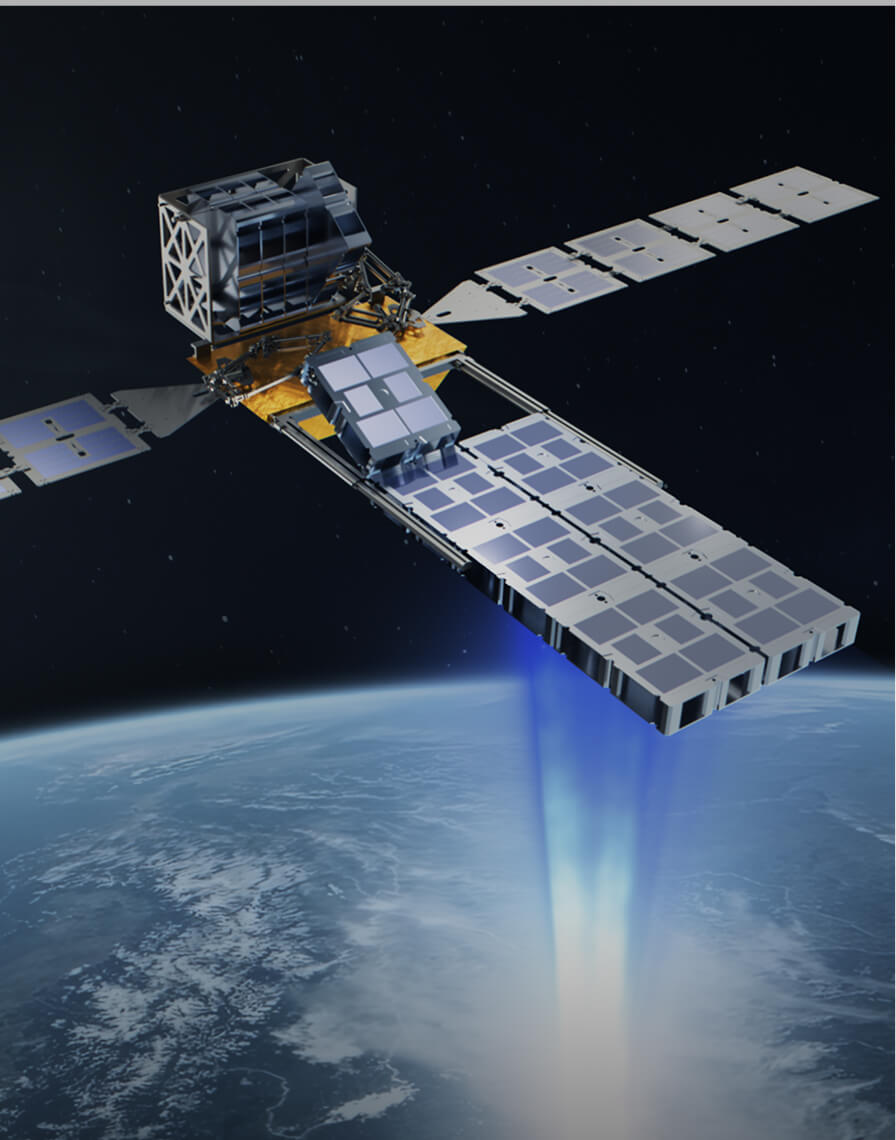
The LINK mission now provides Katalyst with an operational foundation for its next generation of robotic spacecraft. The lessons will feed directly into NEXUS, Katalyst’s standard production vehicle platform, designed to perform a range of on-orbit operations.
Katalyst currently has four follow-on missions and programs in development, including its recently announced Deorbit-as-a-Service mission, selected by the Defense Innovation Unit in support of the Space Development Agency, as well as the ASGARD power-beaming mission, partnering with the U.S. Naval Research Lab for the OECIF.
Those missions will center on NEXUS, building on an existing integrated capability base rather than starting from a new architecture concept. NEXUS incorporates many of the same capabilities as LINK, including RPO, robotics, and maneuvering, while applying them to different customer needs. As a multi-mission spacecraft, it applies the same underlying capabilities across multiple missions, customers, and targets.
“Every mission after LINK will start from a stronger foundation,” said Lee. “We have the flight data, operational experience, and the team that has solved difficult problems on-orbit in real time. We will carry those lessons forward to strengthen and expand the capabilities we bring to the next mission.”
Shared Goals
Katalyst recognizes NASA and the Swift team for taking on an unprecedented mission in an effort to preserve a nationally significant scientific asset and advance U.S. industry innovation and partnership. Katalyst also recognizes all industry partners, suppliers, and the broader space community who supported the mission from development, launch, and through on-orbit operations.
The mission demonstrated that advancing dynamic space operations will require sustained collaboration across government, commercial industry, and the broader space ecosystem. It will also require a willingness to attempt difficult missions, confront failures directly, learn from flight data, and apply those lessons to the systems that follow. Katalyst will carry this forward to the next generation of missions
“The future of space will require spacecraft that can do more once they get there. We’re building toward that future,” said Lee. “Advancing dynamic space operations will take companies that are willing to attempt difficult things, learn from them, and keep moving forward. Katalyst is ready. We believe LINK helped move that effort forward and we intend to keep building.”


.png)