
Katalyst Robotic Spacecraft Passes Testing Milestone Ahead of First-of-its-Kind Mission

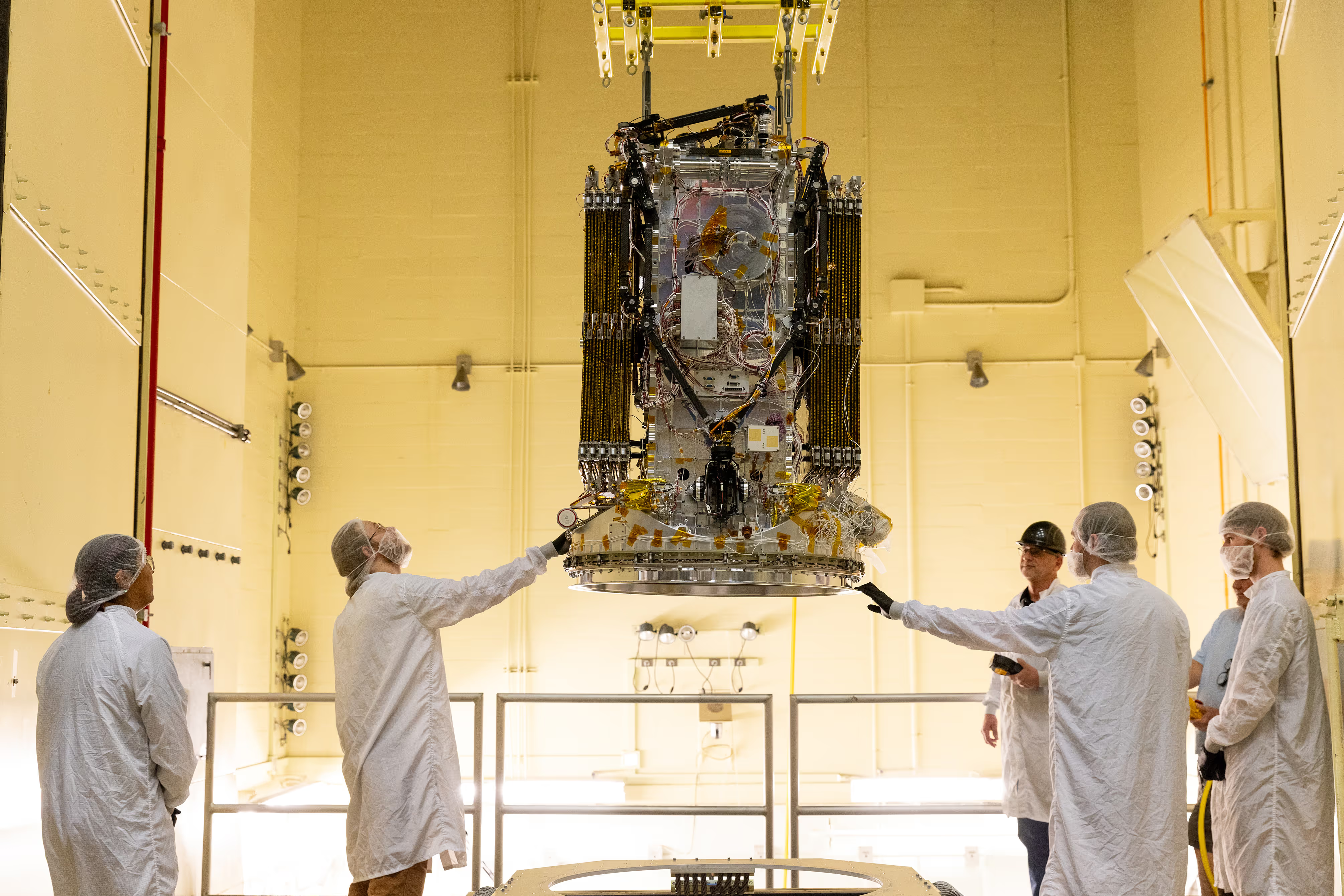
Photo credit: NASA/Scott Wiessinger
Successful environmental testing clears key milestone toward June 2026 launch to extend the life of NASA’s Swift observatory
Broomfield, CO. — May 8, 2026 — Katalyst Space has completed environmental testing of its robotic spacecraft, LINK, clearing a key milestone toward launch. LINK will capture and raise the orbit of NASA’s Neil Gehrels Swift Observatory before it reenters Earth’s atmosphere later this year.
Clearing a Critical Milestone
Completion of the test campaign marks a major step forward in an accelerated program timeline that has compressed spacecraft development, integration, and validation into less than one year following NASA’s contract award in September 2025.
The LINK spacecraft underwent a series of rigorous tests at NASA’s Goddard Space Flight Center, including vibration and thermal vacuum testing designed to simulate launch and the harsh conditions of space.
Thermal vacuum testing in Goddard’s Space Environment Simulator exposed the spacecraft to vacuum and extreme temperature cycles, while also validating key subsystems, including xenon-powered fueled ion hall effect thrusters and deployment of a robotic arm.
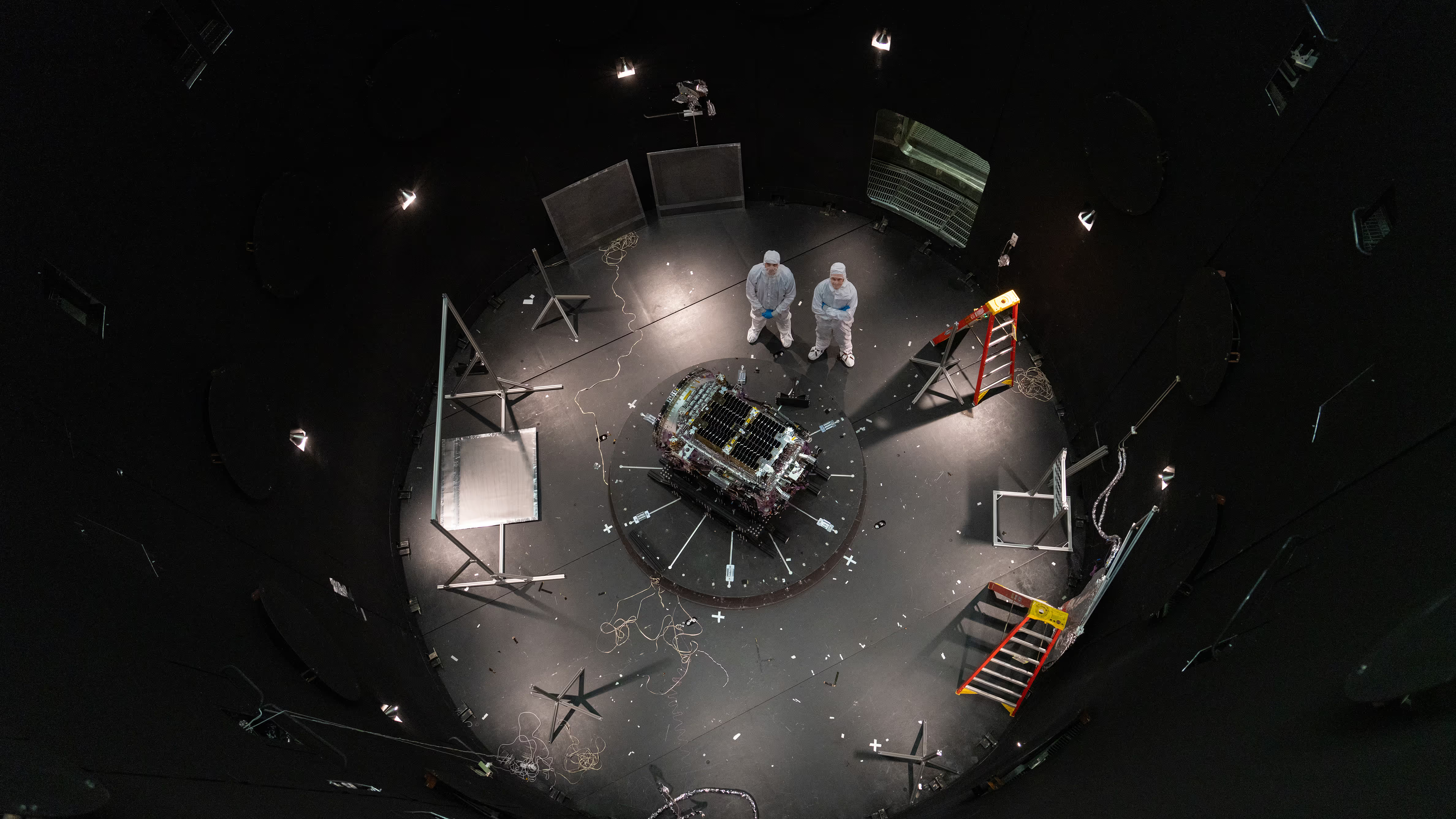
Photo credit: NASA/Sophia Roberts
Final Preparations for Launch
Unlike traditional missions that unfold over several years, the Swift boost is being executed in nine months from contract award to launch.
With a successful testing campaign at NASA Goddard complete, LINK has one last stop at Katalyst’s Broomfield, Colorado, facility for final pre-launch preparations.
Next, LINK will be sent to NASA’s Wallops Flight Facility for integration with the launch vehicle in early June.
A First-of-Its-Kind Mission
The Swift boost mission will attempt something never done before: autonomously capture and reposition an operational satellite that was never designed for servicing.
Beyond preserving a world-class scientific observatory, the mission represents a broader shift toward more frequent and more affordable on-orbit operations, establishing a repeatable model for extending the life of high-value spacecraft and expanding the range of viable missions.

.png)

.jpg)