
Katalyst Secures Ariane 6 Launch to GEO, Opening Robotic Servicing for Satellite Operators
.avif)
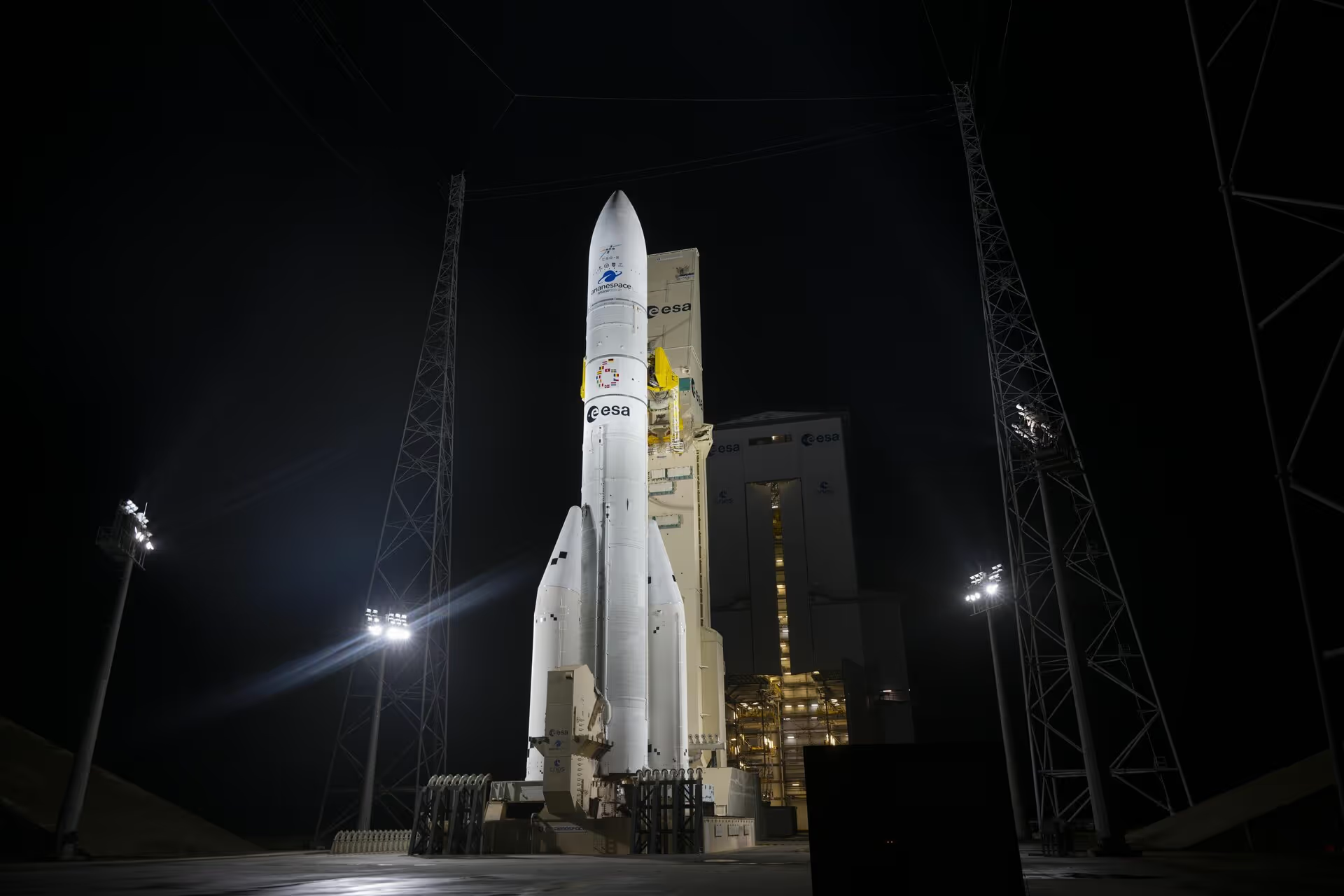
Flagstaff, AZ -- Katalyst Space Technologies has selected Arianespace to launch its robotic space vehicle to geostationary orbit (GEO). The mission is scheduled for the second half of 2027 aboard an Ariane 6 rocket from the Guiana Space Centre in French Guiana.
The spacecraft, NEXUS-1, introduces a new model for dynamic space operations in GEO. The vehicle docks with other satellites to install hardware, reposition spacecraft, and extend mission life, offering a faster, lower-cost alternative to replacement.
These services strengthen space domain awareness and operational resilience in a domain central to national security. They also give operators new tools to sustain and adapt critical communications infrastructure as the industry evolves.
Delivering On-Orbit Services
NEXUS-1 will begin delivering these services through initial government missions before supporting commercial operators. Initial operations include installing a sensor on a Space Force satellite to detect and identify nearby spacecraft and conducting additional rendezvous and proximity operations to support space domain awareness.
Following these missions, NEXUS-1 will transition to commercial servicing operations for communications satellite operators seeking to maintain and upgrade spacecraft already in orbit.
Katalyst is also working with additional satellite operators interested in inspection, upgrade, and life-extension missions in GEO.
Advancing Robotic Servicing with NASA
NEXUS-1 builds on Katalyst’s LINK spacecraft, which will dock with NASA’s Neil Gehrels Swift Observatory to demonstrate autonomous rendezvous and docking with an unprepared spacecraft.
Re-boosting Swift would preserve a key scientific asset worth roughly $500M with a $30M mission completed in less than a year.
Through this collaboration with NASA, Katalyst is developing in-house technologies for autonomous rendezvous and docking with unprepared and uncooperative spacecraft, capabilities required for future servicing missions and dynamic space operations.
Rising Threats in GEO
Geostationary orbit hosts many of the world’s most important satellites supporting national security missions and global communications.
In recent years, the region has become increasingly contested as China and Russia deploy maneuverable spacecraft capable of approaching and monitoring satellites. Operators are increasingly drawn into cat-and-mouse dynamics on orbit, while many satellites currently operating there were not designed to identify or respond to such threats.
NEXUS-1 allows operators to respond to on-orbit activity, quickly react to threats, and safely continue operations.
Offering Servicing Missions
With launch secured, Katalyst is now working with government and commercial satellite operators interested in robotic servicing missions. These services allow operators to upgrade, reposition, and extend the life of satellites already in orbit, enabling greater operational flexibility.
For press inquiries contact Sarah Bradley (sarah.bradley@katalystspace.com)
For commercial inquiries contact Leonard de Guzman (leonard.deguzman@katalystspace.com)
For national security inquiries contact Rob Lamontagne (robert.lamontagne@katalystspace.com)

.png)

.jpg)